Introduction
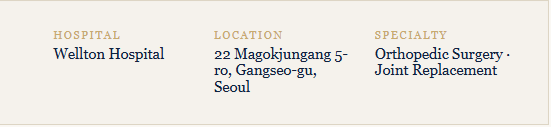
Since its establishment in 2003, Wellton Hospital has continuously achieved outstanding clinical outcomes in the field of hip replacement surgery in Korea.
Under our slogan, “Walking Together With You,” Wellton Hospital focuses not only on surgical procedures but also on the long-term outcomes and quality of life of our patients.
Our clinical philosophy emphasizes a comprehensive care pathway covering surgery, rehabilitation, and recovery.
Since 2005, we have introduced a muscle-preserving surgical technique that protects the external rotator muscles of the hip. Based on this technique, we have developed several specialized programs, including:
- The 145 Surgical Technique
- The 121 Rapid Recovery Program
- Cycle-Based Rehabilitation Program
These integrated treatment approaches help patients recover mobility quickly and return to daily life sooner.
Through this surgical outcomes report, Wellton Hospital reaffirms its commitment to improving patients' quality of life and establishing new standards in hip joint treatment.
Clinical Performance Indicators
1. Hip Replacement Surgical Volume
Between 2009 and 2024, Wellton Hospital performed a total of:
7,208 hip replacement surgeries
This includes:
- Total Hip Replacement (THR)
- Hemiarthroplasty
Annual Surgical Volume (2009–2024)
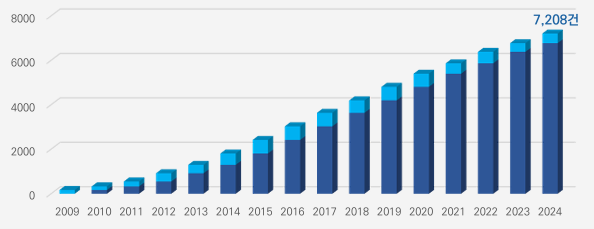

This large surgical volume demonstrates extensive clinical experience and surgical expertise.
Surgical Safety Outcomes
1. Postoperative Dislocation Rate
Dislocation is one of the most important complications following hip replacement surgery.
In general, global studies report dislocation rates of 2–4%.
At Wellton Hospital:
Dislocation rate:
0.21%
(among 7,208 surgeries)
Annual Dislocation Cases (2009–2024)
Reference Period: 2009–2024 / Unit: Cases
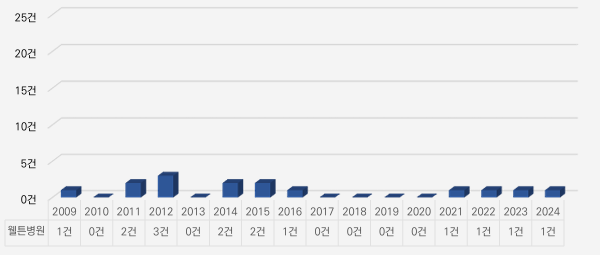
· X-axis: Year · Y-axis: Cases
This is significantly lower than the international average, indicating excellent surgical stability and technique.
2. Postoperative Infection Rate
Infection following joint replacement is a key indicator of surgical quality and infection control.
From 2009 to 2024:
Total surgeries: 7,208
Number of infections: 3 cases
Infection rate:
0.04%
Annual Infection Cases
Reference Period: 2009–2024 / Unit: Cases

· X-axis: Year · Y-axis: Cases
This extremely low rate reflects:
- Strict sterile surgical environments
- Appropriate antibiotic protocols
- Systematic postoperative care.
3. Intraoperative Fracture Rate
Intraoperative fractures can occur during hip replacement surgery and are used as an indicator of surgical precision.
From 2009 to 2024:
Total surgeries: 7,208
Number of fractures: 1 case
Annual Fracture Cases
Reference Period: 2009–2024 / Unit: Cases

· X-axis: Year · Y-axis: Cases
No cases have occurred since 2013, demonstrating a high level of surgical precision and procedural stability.